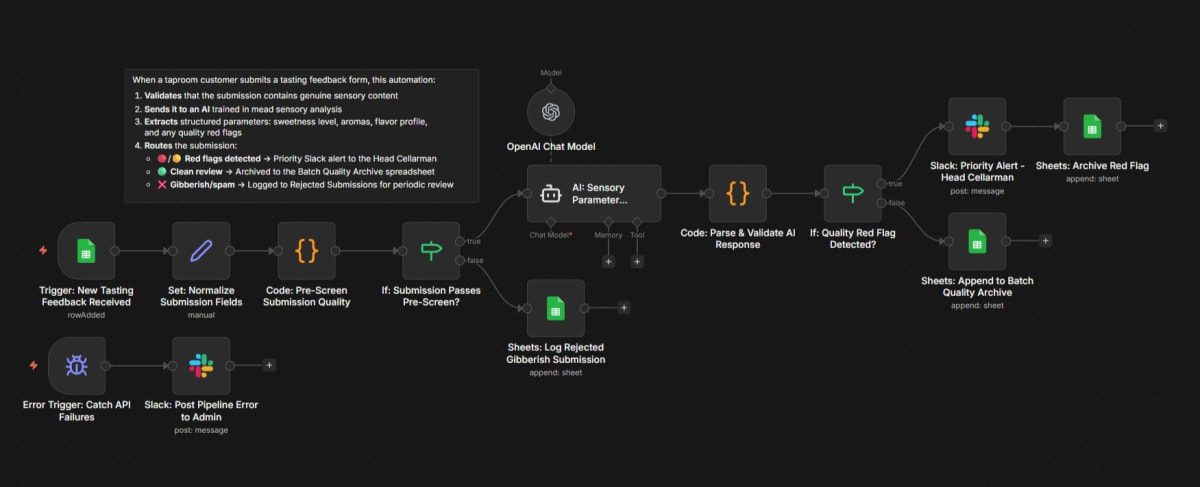
Tasting feedback pipeline that processes taproom sensory submissions, pre-screens for genuine content, uses OpenAI to extract structured mead parameters (sweetness, aromas, flavor profile, red flags), routes red-flag entries to a priority Slack alert and red-flag archive sheet, stores clean reviews in a batch quality archive, logs gibberish/spam to a rejected sheet, and catches failures with a Slack admin alert.
n8n · workflow canvasproduction build
Context
A meadery taproom needed a systematic way to process customer tasting feedback, extract consistent sensory attributes at scale, and escalate quality red flags immediately while keeping clean reviews and rejected submissions organized.
Approach
Built a two-part n8n workflow with a Google Sheets intake trigger and a separate API failure error trigger. The main flow normalizes the submission, runs a code-based pre-screen to filter gibberish, sends valid content to OpenAI for sensory parameter extraction, parses and validates the structured response, checks for quality red flags, and routes accordingly: red flags trigger a Slack alert to the Head Cellarman and are archived in a red-flag sheet, clean reviews are appended to the batch quality archive, and pre-screen failures are logged to a rejected submissions sheet.
Architecture
Workflow 1
New Tasting Feedback Received (Google Sheets)
Set: Normalize Submission Fields
Code: Pre-Screen Submission Quality
If: Submission Passes Pre-Screen?
No: Sheets: Log Rejected Gibberish Submission
Yes
AI: Sensory Parameter... (OpenAI)
Code: Parse & Validate AI Response
If: Quality Red Flag Detected?
Yes: Slack: Priority Alert — Head Cellarman + Sheets: Archive Red Flag
No
Sheets: Append to Batch Quality Archive. Workflow 2: Error Trigger: Catch API Failures
Slack: Post Pipeline Error to Admin
Results
~3 hrs/weekReview processing time saved
Minutes, down from end-of-day reviewRed-flag detection time