AI-Powered Environmental Health Research Aggregator
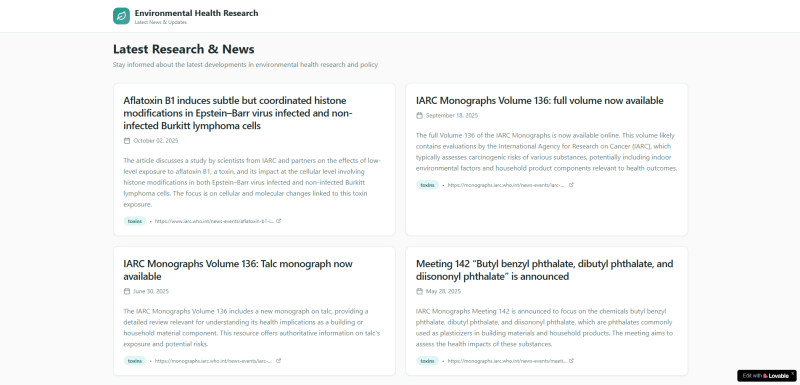
Automated research feed aggregation system that collects, processes, and displays environmental health news from IARC, NIH, UN, EPA, and PubMed with AI-enhanced summaries, reducing manual research curation time by 80% with real-time updates.
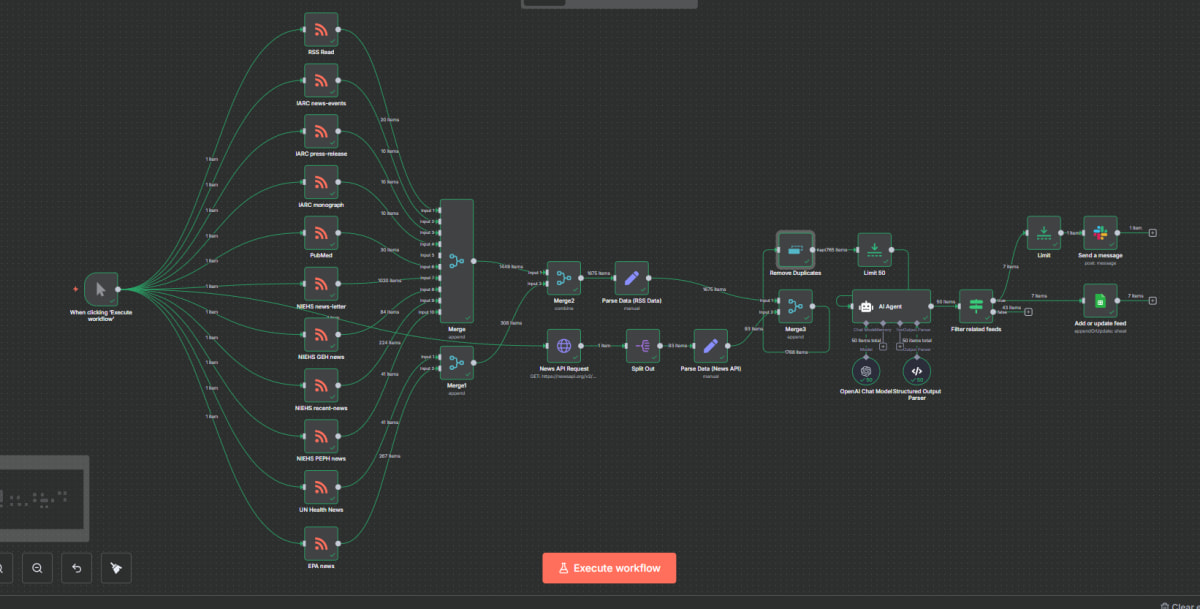
n8n · workflow canvasproduction build
Context
Researchers and public health professionals manually monitored multiple scientific databases and news sources daily, read through lengthy publications, extracted key findings, removed duplicates, categorized content, and maintained updated databases—spending 15+ hours per week on repetitive information gathering tasks.
Approach
Built n8n automation workflow that ingests data from multiple RSS feeds and APIs (IARC, NIEHS, PubMed, UN, EPA), merges and parses content into structured metadata, removes duplicates and cleans data, uses OpenAI to enhance titles and generate concise summaries with standardized formatting, filters content by relevance using AI categorization, stores processed articles in Supabase database, and powers a Lovable web app with real-time updates for public access.
Architecture
Multiple RSS/API sources
Merge nodes
RSS/News API parsers
Duplicate removal
OpenAI enhancement (title normalization, summarization, tag generation)